

In a restaurant with two sittings a day, it is rarely the table itself that breaks. Instead, problems tend to arise with chipped edges, stained tabletops or wobbly bases. These may seem like minor defects, but they are visible to customers at every meal.
At MisterWils, we import and distribute furniture for the hospitality industry from Alcalá de Guadaíra (Seville). Our 6,000 m² warehouse holds more than 1,100 tabletops and over 2,400 table bases in stock. This guide explains which tabletop and base combinations are best suited to different types of establishments and which dimensions work best with your chairs.
 Explore our collection of restaurant tables
Tabletops and bases: how hospitality tables are assembled
Most restaurant tables are purchased in two separate components: the tabletop and the base or frame. This makes it possible to combine different materials, shapes and heights to suit each area of the establishment. If one component becomes damaged, only that part needs to be replaced. This is the standard system for contract furniture projects, from cafés to hotel dining rooms.
- Freedom of combination. The same tabletop can be used for a standard-height or bar-height table simply by changing the base.
- Easy replacement. If a tabletop gets damaged, you can replace it while keeping the existing base in service.
- Visual consistency. Using the same base design throughout the establishment creates a cohesive look, even when tabletops come in different sizes.
- Logistics. Components are easier to transport and store separately, and can be assembled in just a few minutes.
Before placing your order, check two things: whether the tabletop comes with pre-drilled holes or a mounting plate, and the maximum tabletop size supported by the base. Not all bases are compatible with every tabletop.
Browse our catalogue of hospitality tabletops, table frames and bases.

Tabletops: which materials are best suited to each use?
For intensive use, HPL laminate and solid-grade compact laminate are the most practical tabletop materials. They resist scratches, stains and moderate heat, and can be cleaned with a cloth. Solid wood adds warmth and can be sanded and refinished, but requires regular maintenance. Compact laminate is also suitable for outdoor use.
| Tabletop material | Advantages | LimitationsBest suited to | |
| HPL laminate (on chipboard or MDF) | Resistant to scratches and stains; available in a wide range of finishes (wood, stone, concrete) | The edges are the weakest point; not suitable for outdoor use | Cafés, tapas bars and high-turnover dining areas |
| Solid-grade compact laminate | Highly resistant to knocks and moisture; no edge banding required; suitable for indoor and outdoor use | More expensive and heavier than standard laminate | Terraces, fast-food restaurants, school and corporate dining areas |
| Solid wood (teak, acacia, mango, ash, pine) | Warm appearance; ages beautifully; can be sanded and refinished | Susceptible to water rings and heat damage if not properly sealed | À la carte restaurants, fine dining establishments and rustic or Mediterranean-style venues |
| Wood veneer or lacquered MDF | Wood-like appearance at a lower price and weight | A strong impact on the edge can be difficult to repair | Mid-range restaurants and hotels |
| Ceramic and metal | Mediterranean style; heat-resistant; easy to clean | Joints and edges require care | Bistros, covered terraces and beach clubs |
| Marble | Premium appearance; cool, smooth surface | Porous: can absorb wine, oil and acidic substances if untreated; heavy | Designer cafés, cocktail bars and fine dining establishments |
Our catalogue includes solid wood tabletops such as Teka Etore, Delhi (mango wood), Jaipur and Ashley (ash wood). Our Lamidur range features laminate finishes such as oak (Cognac), marble (Cracked) and concrete (Calcit). For outdoor use, we offer the Exteriolit range, including Silverin, as well as ceramic models such as Tanya and Denaria.
Pay particular attention to the edges. Chairs knock against table edges dozens of times a day. Rounded edges or thick PVC edging help protect the tabletop and prevent clothing from catching. For solid wood, choose a tabletop that has been sealed or varnished for professional use.

Table bases: central pedestal, double base or four legs
A central pedestal base provides more legroom and allows more diners to sit comfortably at smaller tables. Four-legged bases offer greater stability for large, rectangular tabletops. For rectangular tables longer than 80 cm, a double base or four-legged frame is generally recommended.
Stability depends on the proportions between the base and the tabletop. A small base beneath a large tabletop can cause the table to tip when someone leans against the edge. This is why each base has a recommended maximum tabletop size. Always check the product specifications before combining components.
| Base type | Advantages | Limitations | Suitable tabletop sizes |
| Central pedestal base (round, square or cross-shaped base) | Provides more legroom; makes it easier to push tables together | May wobble if the base is too small for the tabletop | Round and square tabletops measuring 60–80 cm; round tabletops measuring 90–100 cm with a wide base |
| Double base | Supports elongated tabletops while keeping the central leg area clear | Takes up more space underneath the table than a central pedestal base | Rectangular tabletops measuring 120–140 cm |
| Four-legged frame | Offers the greatest stability; ideal for large tabletops | The legs restrict where chairs can be positioned | Rectangular tables and group dining areas |
| Bar-height base | Creates bar-style areas for quick dining | Requires matching bar stools and smaller tabletops | 60–70 cm tabletops for casual dining areas |
Three details make a real difference in hospitality settings:
- Adjustable levelling feet. They compensate for uneven floors, particularly on terraces, and prevent tables from wobbling. The Álamoframe features adjustable feet.
- Material and finish. Painted iron is the most common choice for indoor use. Stainless steel, aluminium and polyethylene are better suited to humid environments. Wooden models such as Olaviand Krigerwork well in Nordic or rustic-style dining areas.
- Matching designs in two heights. Bases such as Babalooand Cledanare available in both standard and bar-height versions, maintaining the same aesthetic throughout the dining area and bar.
For large venues looking to furnish their spaces with the same table base model, Elara and Tilda Textured are two of the models we stock in the largest quantities in our warehouse.
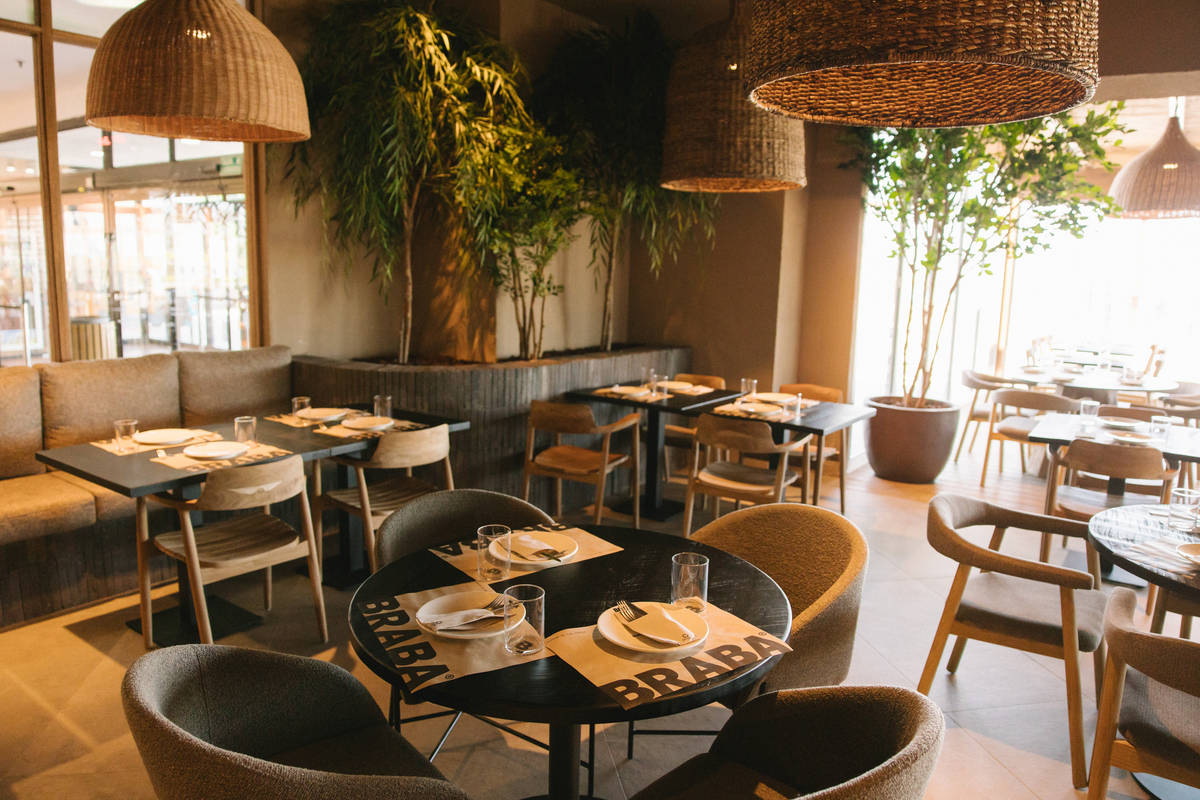
Restaurant table dimensions and seating capacity
A standard restaurant table is approximately 75 cm high and requires around 60 cm of table frontage per diner. A 70 × 70 cm table is the most versatile option for two people; an 80 × 80 cm table comfortably seats four; and a 120 × 80 cm rectangular table accommodates four diners with room for sharing dishes. For bar-height tables, the tabletop should be 105–110 cm high and paired with stools with seats approximately 75 cm high.
| Tabletop dimensions | Seating capacity | Recommended use | |
| 60 × 60 cm or Ø 60 cm | 2 | Cafés, breakfast areas and additional seating near the bar | |
| 70 × 70 cm or Ø 70 cm | 2 (4, but very tight) | À la carte restaurants and bistros; the most versatile size | |
| 80 × 80 cm or Ø 80 cm | 4 | À la carte dining areas serving individual main courses | |
| Ø 90–100 cm | 4–5 | Round tables for groups and fine dining establishments | |
| 120 × 70 or 120 × 80 cm | 4 | Dining areas serving sharing dishes | |
| 140 × 80 cm | 4, or 6 with end seating | Groups and hotel dining rooms |
- Clearance beneath the tabletop. Leave 27–30 cm between the seat and the underside of the tabletop, and make sure chair armrests can slide underneath. Find out more in our guide to restaurant chairs.
- Space between tables. As a general working guideline, allow approximately 60 cm behind each occupied chair so diners can get up without disturbing others. Aisle widths are governed by building regulations: Spain’s Technical Building Code requires a minimum width of 1.00 m for evacuation corridors (DB-SI) and 1.20 m for accessible routes (DB-SUA). Local regulations and business licences may impose stricter requirements, so always have your floor plan checked by the project architect or technical specialist.
- Square tables that can be joined together. Square tabletops of the same size can be pushed together to accommodate larger groups without changing the furniture.
- Round tables for irregularly shaped dining areas. They allow for better circulation and have no corners for people to bump into.
Four table and base combinations to help you plan your project
These tabletop and base combinations from our catalogue are designed to suit four different types of establishment.
| Combination | Tabletop | Base | Suitable for
| High turnover | Lamidur Cognac, oak-effect laminate | Elara, metal central pedestal base available in three colours | Cafés and tapas bars that need large quantities of tables and quick, easy cleaning
| Natural wood warmth | Teka Etore, solid teak | Kriger, wooden frame | À la carte restaurants and fine dining establishments with a natural aesthetic
| Mediterranean | Tanya, ceramic and metal | Tirena, rustic style | Bistros, beach clubs and covered terraces
| Outdoor terrace | Exteriolit Silverin, outdoor tabletop | Álamo, steel base with adjustable levelling feet | Terraces with uneven flooring
Stock levels change daily. Check availability on the product page or with your sales representative before placing your order.
Indoor use, covered terraces and outdoor spaces
An indoor tabletop is not suitable for an exposed outdoor terrace: laminate on chipboard swells when exposed to moisture, while untreated wood can crack in direct sunlight. For outdoor use, choose solid-grade compact laminate or tabletops specifically designed for outdoor environments, paired with aluminium, stainless steel or corrosion-treated iron bases.
- Indoor use: Any tabletop designed for professional use will work. This is where solid wood and marble really stand out.
- Covered terraces: Although tabletops are not directly exposed to rain, they are still affected by humidity, salty air and indirect sunlight. Compact laminate, ceramic or properly treated teak are better choices. See our covered terrace furniture collection.
- Exposed outdoor areas: Choose compact laminate or outdoor-specific tabletops such as those in the Exteriolit range, paired with a stable base and adjustable levelling feet. In windy locations, opt for heavy bases or models that can be anchored to the ground. See our outdoor terrace furniture collection.
If you need to bring the terrace furniture indoors every night, consider the weight as well: a cast-iron base provides excellent stability but is harder to move.
Maintenance: how to extend the life of your tables
- Laminate and compact laminate: Clean with a damp cloth and mild detergent. Avoid abrasive scouring pads, which can damage the finish and remove its shine
- Solid wood: Clean without soaking the surface, wipe up spills immediately and reapply oil or varnish whenever the protective finish starts to wear.
- Marble and ceramic: Clean up wine, lemon juice and vinegar immediately, and use pH-neutral cleaning products.
- Bases: Check the connecting screws every few months and adjust the levelling feet whenever you change the dining room layout.

Six common mistakes when buying restaurant tables
- Choosing a tabletop based on its appearance alone. Without checking the edges, durability and cleaning requirements, the table may deteriorate within just a few months.
- Pairing a small base with a large tabletop. The table will wobble as soon as someone leans on it.
- Using indoor tabletops on outdoor terraces. Laminate on chipboard swells when exposed to moisture.
- Choosing the table before the chairs. Armrests that do not fit underneath or incompatible heights can force you to change your entire order.
- Mixing too many different sizes. This makes it harder to join tables for larger groups and replace individual components.
- Overlooking adjustable levelling feet. A wobbly table can lead to customer complaints at every service.
What information to provide when requesting a quote
With the following information, our sales team can recommend specific combinations right from the start:
- Type of establishment and number of services per day.
- Number of tables required for indoor areas, covered terraces and outdoor spaces, including dimensions and seating capacity.
- Chairs or stools you already own or are planning to purchase.
- Floor plan of the dining area, if available.
- Preferred style, reference images and tabletop material.
- Opening date and approximate budget per table.